Partners in Science
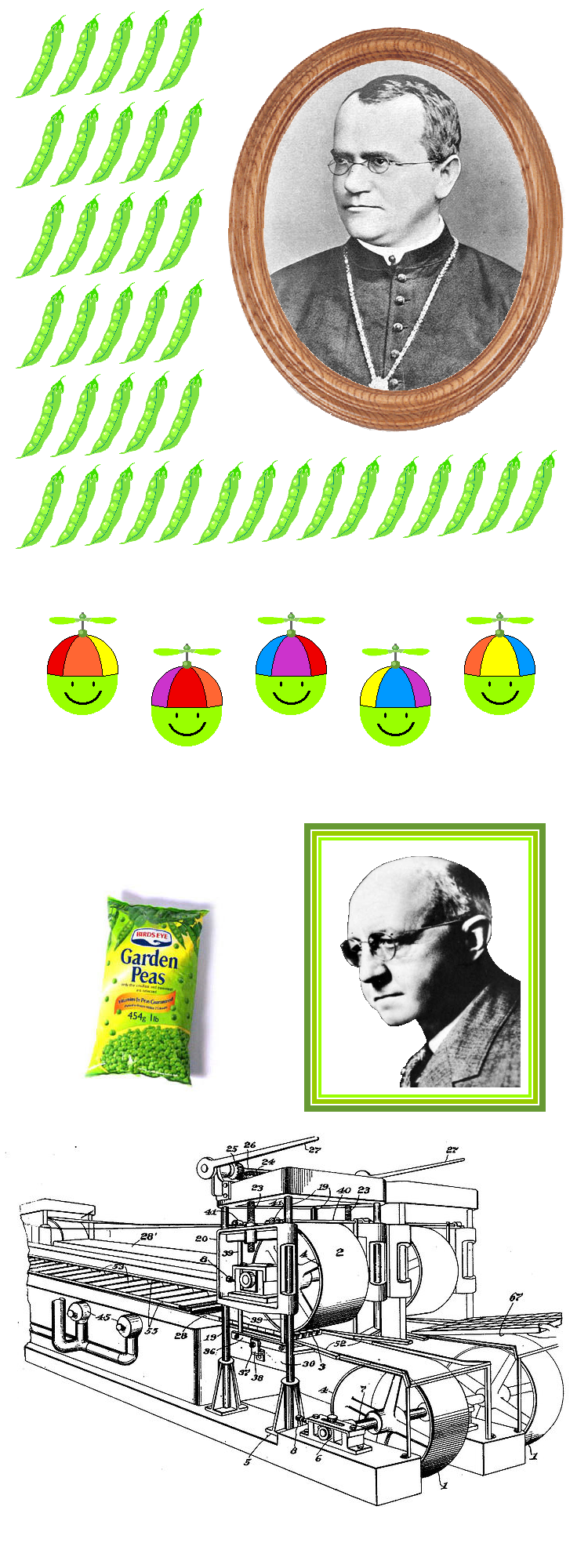
Peas' first big contribution to science came in the mid-1800's, in the work of Gregor Mendel, now known as the father of heredity science and modern genetics.
Over a stretch of eight years from 1856 to 1863 in what is now the Czech Republic, Mendel grew and tested some 29,000 pea plants in a monastery garden about the size of ours here at Robbins Farm Park. From that research, Mendel established some of the first principles that help explain why you probably look a little like your mother and a little like your father, but maybe also a bit like Aunt Emma and Uncle Josh, too. Because of their size and because of their simplicity, peas were the perfect partners for Mendel in his research.
Peas' second big contribution to the advance of science came 70 years later, in the late 1920's. This time the advance happened right here in Massachusetts. Clarence Birdseye, an inventor in his early 30's, developed a technique for quick freezing foods in a factory-based mass production process. Peas lent themselves very well to this process. For the first time ever, fresh-tasting, sweet green peas became available to average-income households year-round, not just in the Spring.
Birdseye's innovations are now considered the birth of the modern frozen food industry. You can still find the Birdseye brand in the frozen vegetable sections of most supermarkets.
And which of the veggies in Robbins Farm Garden were there at the very beginning? You guessed it: those fresh, sweet, and unassuming peas.